

A recent report on immigrant welfare use has gone viral, largely because of its striking charts comparing welfare use across national origins to that of native-born Americans. The findings seem stark. Non-citizen–headed households are significantly more likely to rely on welfare than native-born households. And immigrants from certain regions appear far more likely to use welfare than others, with only South Asians, showing lower a welfare use rate than native-born Americans.
The implication seems obvious: some countries produce immigrants who are more likely to rely on welfare.
But that conclusion, while intuitive, is misleading. The real question is not where immigrants come from, but how they are selected.
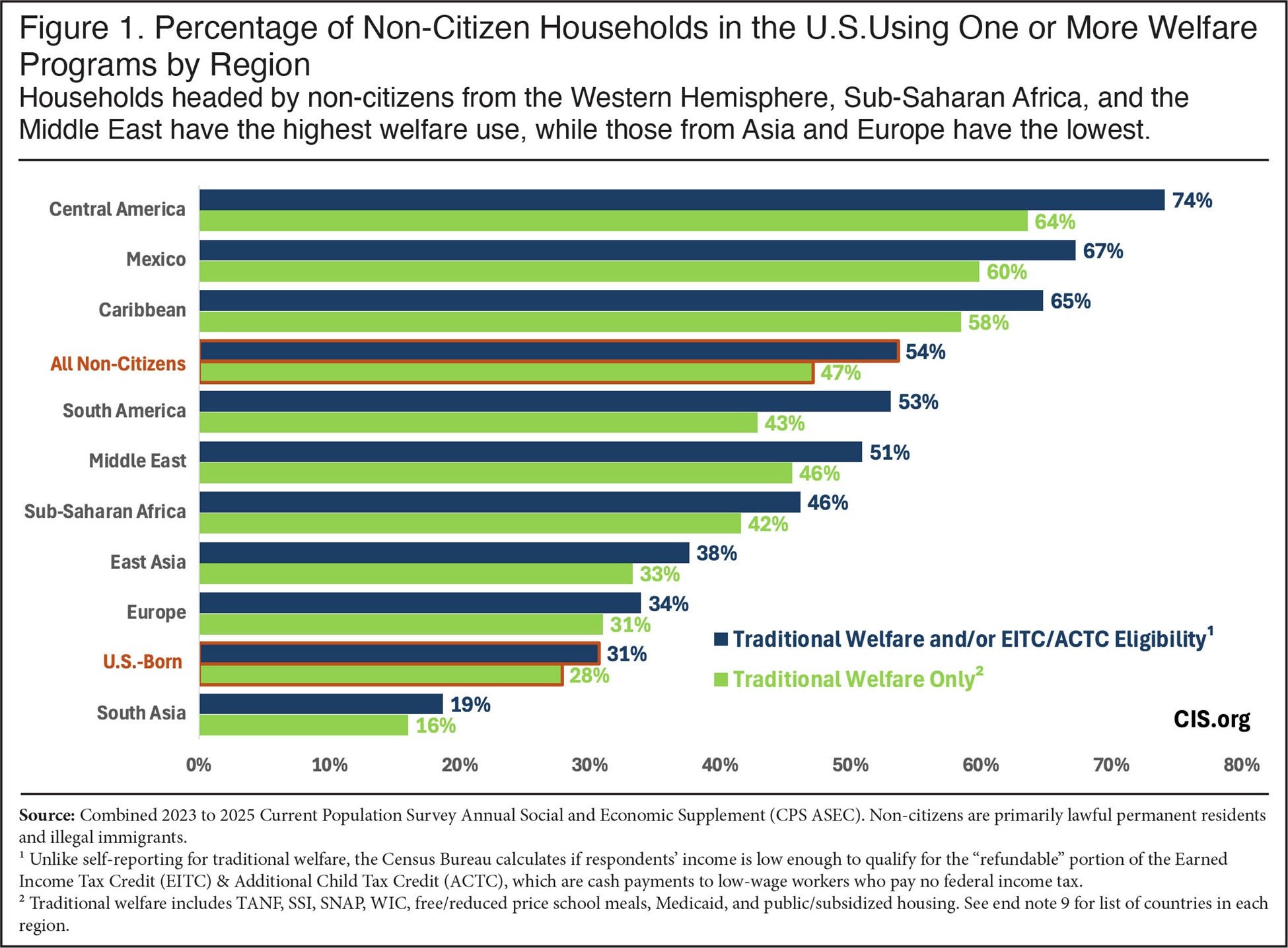
At first glance, it may seem surprising that many immigrant-headed households report welfare use, since federal law places significant restrictions on non-citizens. Except for refugees and a few other categories, most legal immigrants are barred from federal welfare programs for their first five years in the United States, and illegal immigrants are generally ineligible.
In practice, however, these restrictions have important limitations.
The following categories of non-citizens are eligible for welfare:
Noncitizens who have legal permanent residency for over 5 years.
Refugees resettled by the federal government.
Cuban and Haitian illegal or legal immigrants under the Refugee Educational Assistance Act of 1980 which defines them as “Cuban and Haitian entrants.”
Afghans and Ukrainians paroled into the United States.
Asylees after their asylum applications are approved.
In addition, some states (e.g. New York and California) extend benefits like Medicaid to non-citizens using state funds, including to illegal immigrants.
There is also an important measurement issue. Welfare use is typically recorded at the household level, not the individual level. But households are often mixed rather than purely immigrant or native-born. An immigrant-headed household may include a native-born spouse and U.S.-born children, while a native-headed household may include an immigrant spouse. If any member qualifies for benefits, the entire household is counted as receiving welfare. This blurs the distinction between immigrant and native welfare use and introduces selection effects into the data. And the presence of children in the household and age of householder thus matter significantly since children make household eligible for programs such as the Children’s Health Insurance Program (CHIP), the refundable portions of Child Tax Credit (CTC) and the Earned Income Tax Credit (EITC).
Other charts from the Center for Immigration Studies (CIS) correctly show that immigrant-headed households—especially those headed by noncitizens—are more likely to use welfare. Here, “welfare” includes Medicaid, Temporary Assistance for Needy Families (TANF), Supplemental Nutritional Assistance Program (SNAP), Supplemental Security Income (SSI), and a host of other cash and non-cash assistance by the federal and state governments.
But this raises a question that I intend to address here: what drives differences in welfare use between immigrants? Is country of origin, truly, what best predicts welfare use?
I replicated the CIS analysis using Current Population Survey (CPS) data from 2023 to 2025 just like them. However, I extended the analysis in a crucial way. Instead of looking only at country or region of origin, I matched each country with the share of immigrants who entered through employment-based visas, family sponsorship, or refugee and humanitarian pathways.
While individual immigration paths are not directly observable in the CPS, selection patterns are clear at the country level. For example, nearly half of Indian immigrants in the past decade received employment-based green cards, compared to just 2 percent of Afghan immigrants so it is much more likely that a random Indian immigrant is an employment-based immigrant than it is for a random Afghan.
Once this variable is controlled for, the story changes fundamentally.
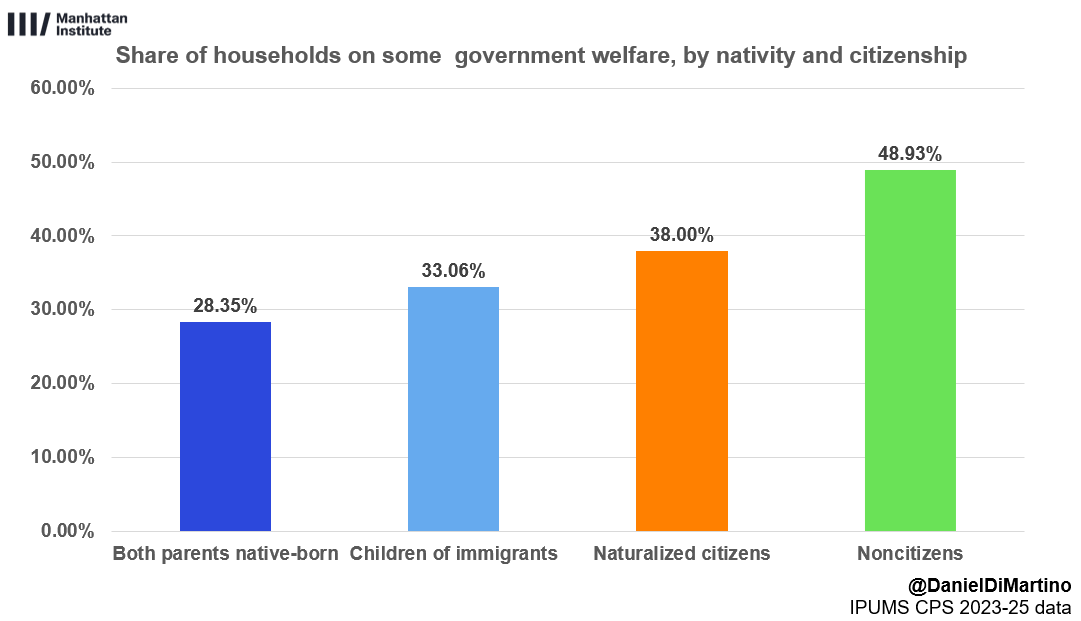
First off, Figure 1 shows that non-citizen–headed households have the highest welfare use, followed by households headed by the children of immigrants. However, this comparison is partly driven by age differences, since natives tend to be older.
Figure 1: Share of households with at least some use of welfare by household head nativity and citizenship.
Restricting the sample to household heads aged 25 to 64 (Figure 2) reduces this gap but it remains large. About one in two non-citizen headed households use any form of welfare compared to one in three multigenerational Americans and children of immigrants.
Figure 2: Share of households with at least some use of welfare by household head nativity and citizenship among 25 to 64 year olds.
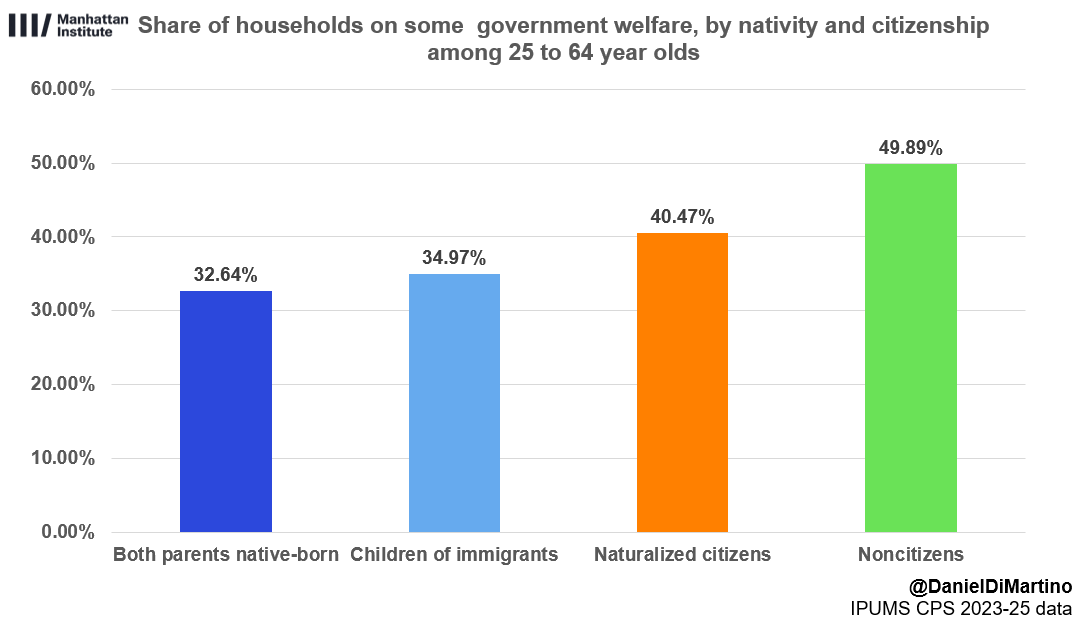
Ideally, an effective immigration system would produce the opposite pattern: low welfare use among non-citizens restricted to the few refugees admitted, with higher usage only after naturalization expands eligibility. Instead, the data shows the opposite is happening.
So, what explains these differences?
I find that the strongest predictor of immigrant welfare use is not country of origin, which is actually insignificant, but the share of immigrants from a country who are admitted through employment sponsorship.
Employment-Based (EB) immigrants are those in the EB-1 through EB-5 categories and are sponsored by a company to work in the United States and overwhelmingly have college degrees, and mostly advanced ones. Some are low skilled workers in the EB-3 category and religious workers in the EB-4 category. Others are wealthy investors who receive an investors green card in the EB-5 category. But most are college-educated workers with upper-middle income jobs and high English proficiency.
Not just the status of the individual but the EB share of immigrants from a country matter since immigration is path dependent thanks to chain migration. If more employment-based immigrants are admitted from a country, that will result in a more highly educated family-sponsored immigrant flow in the future since the family members of highly-educated immigrants also have otherwise higher education. On the other hand, if many less educated refugees from one country are admitted, they will later sponsor less educated family members to come to America.
Figure 3: Regions of the world.
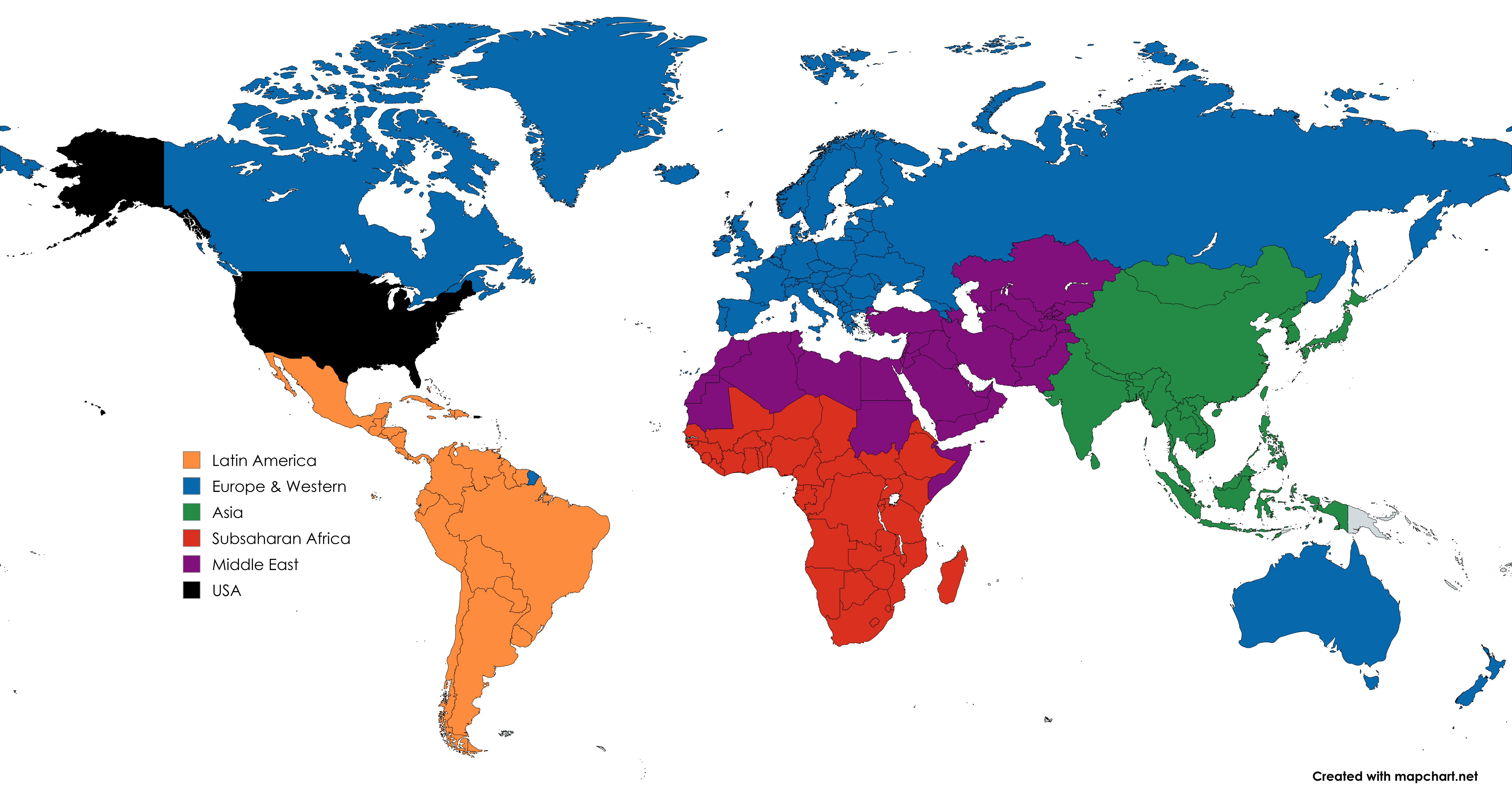
Figure 4: Welfare use by region of origin among 25 to 64 year old household heads.
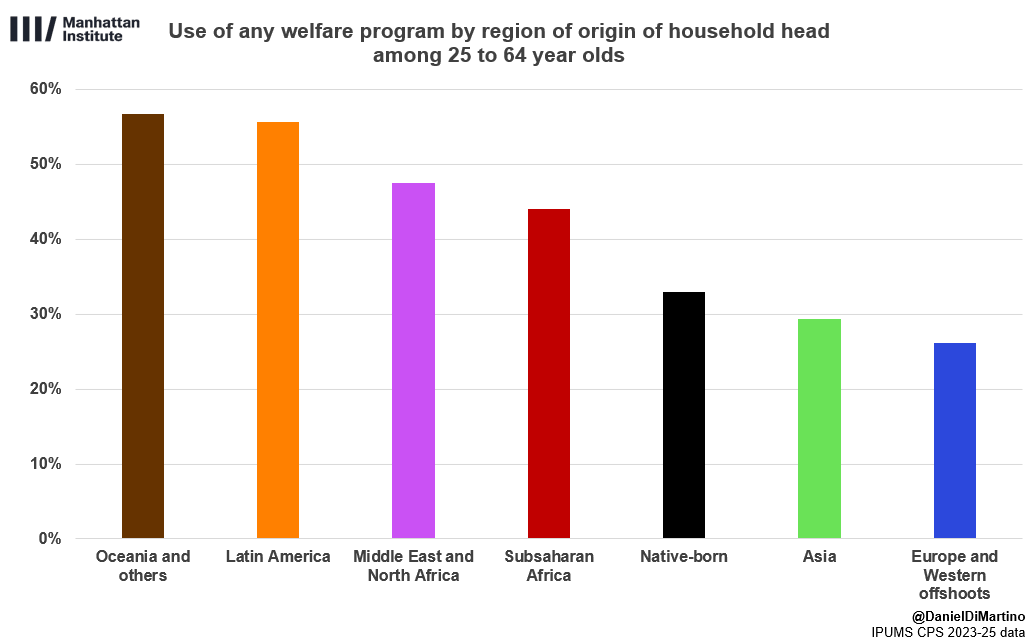
Figure 5: Subregions of the world.
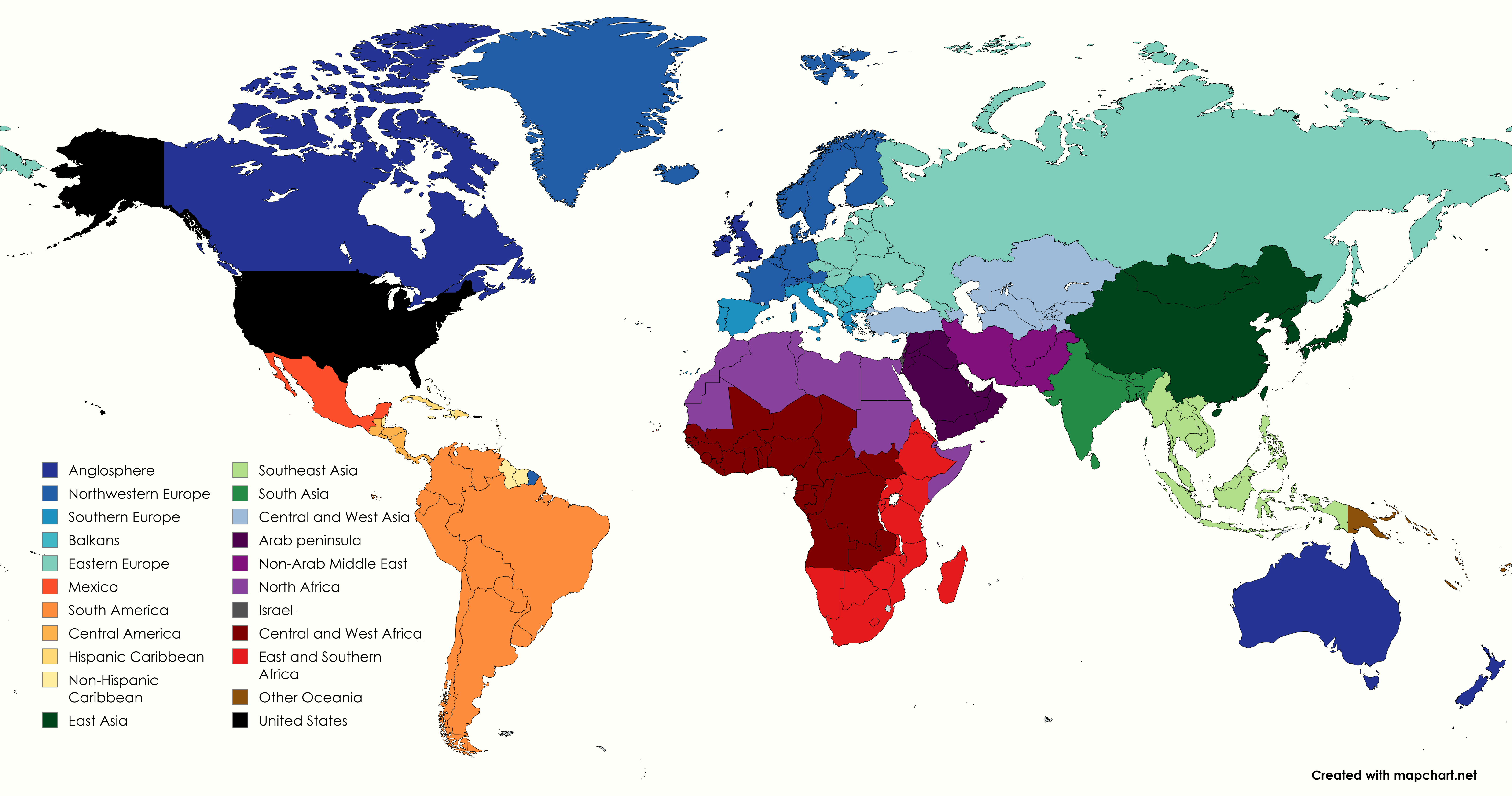
Figure 6: Welfare use by subregion of origin among 25 to 64 year old household heads.
At first glance, regional comparisons appear to confirm the CIS narrative: immigrants from Europe and Asia have lower welfare use than those from Latin America, Africa, or the Middle East. But this comparison overlooks a critical fact: immigrants from different regions are selected in very different ways.
Many African immigrants, for example, enter as refugees and are immediately eligible for benefits. By contrast, a large share of South Asian immigrants arrive through employment-based visas. Comparing these groups without accounting for selection is misleading because they don’t depend on welfare due to their country of origin or culture but because one is a refugee and the other was sponsored by an employer.
Using Department of Homeland Security data on green card issuances from 2014 to 2023, I construct the share of immigrants from each country admitted through employment, family, and humanitarian categories as follows:
- Immediate Relatives of U.S. citizens (Spouses, children, parents)
- Family-Based immigrants (extended relatives of U.S. citizens)
- Employment-Based immigrants
- Refugees and asylees
- Diversity lottery winners
- Others
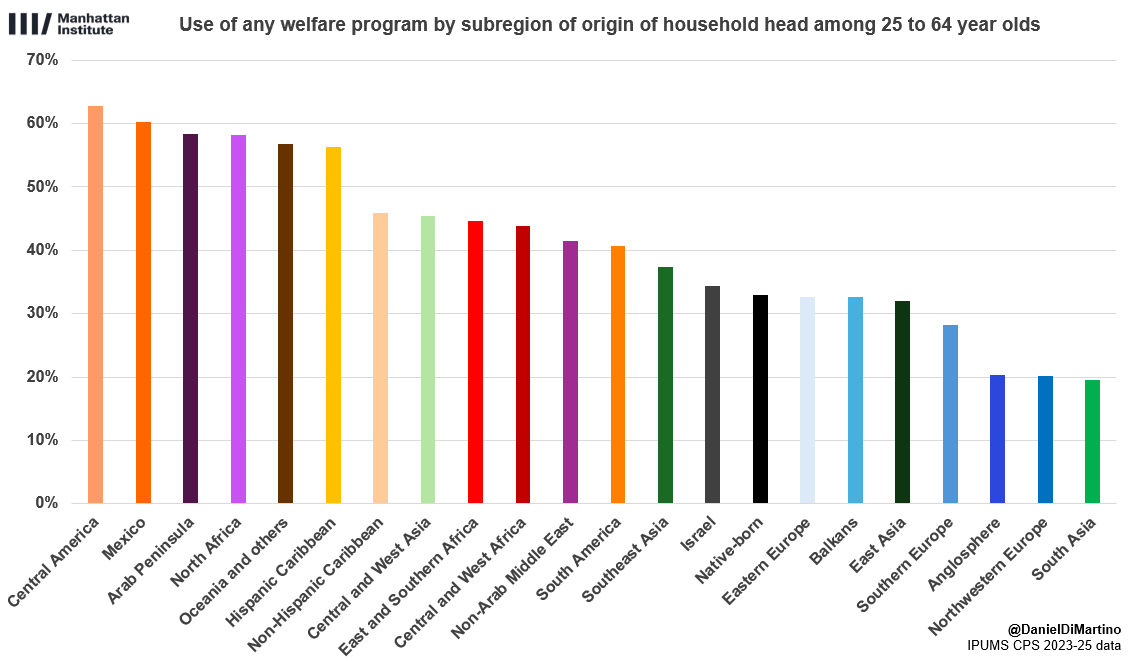
The differences are striking. Immigrants from Europe, Israel, and much of Asia are far more likely to be granted residence in America through employment-based visas. By contrast, immigrants from the Hispanic Caribbean and parts of the Middle East are far less likely to be selected through employment.
This selection mechanism explains much of the variation in welfare use.
Figure 7: Employment-Based share of immigrants by subregion of origin from 2014 to 2023.
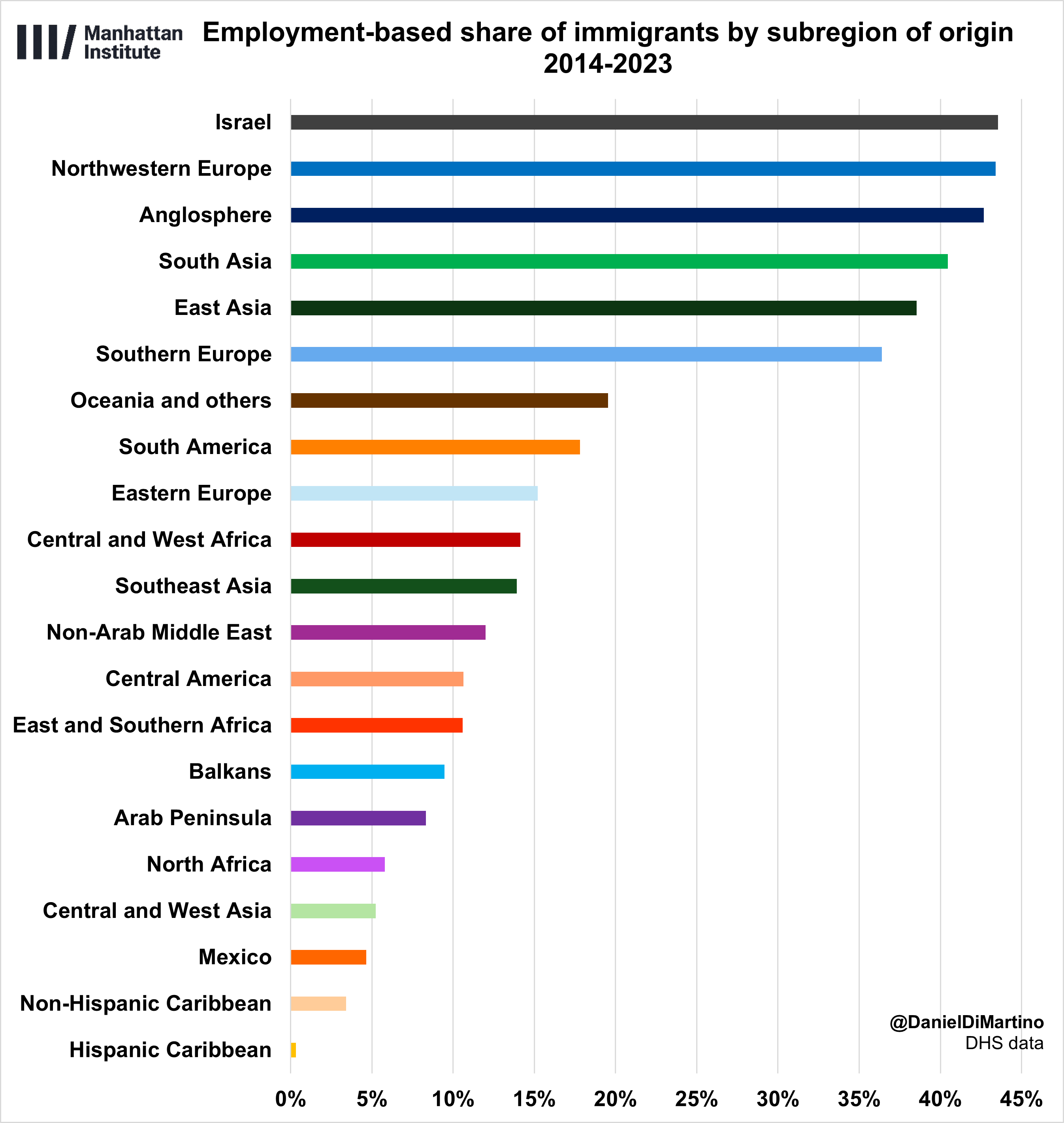
Figure 8: Share of immigrants by category of admission by subregion of origin.
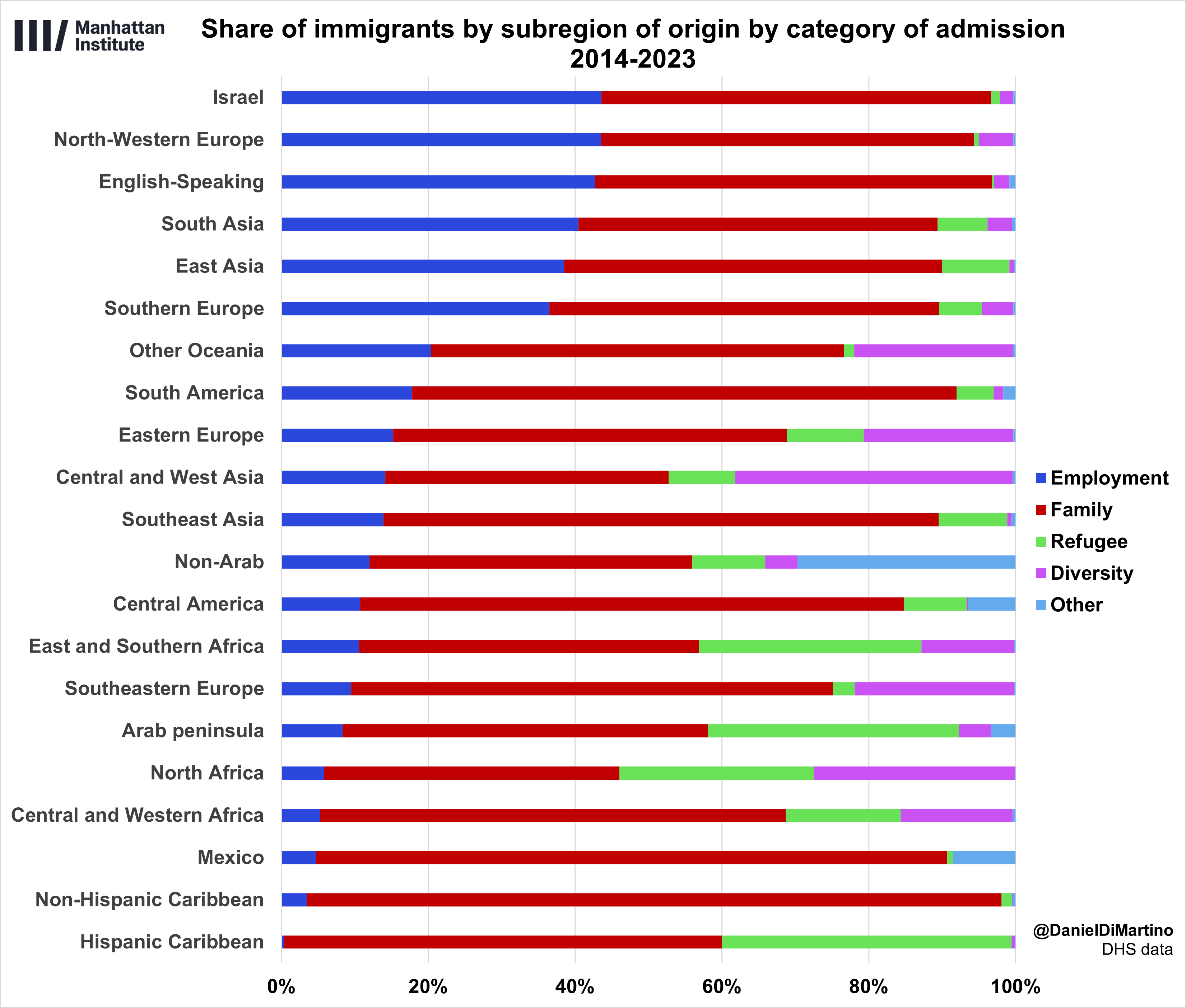
The mechanism of selection of immigrants matters much more than their origin since clearly a random South Asian is much less educated than a random Eastern European, yet it is South Asian immigrants, not Eastern Europeans, who have a lower rate of welfare use. How is this possible if India is a much less educated countries like Poland o Russia? This is because Indians are highly selected and even their family-based immigration is the result of previous highly skilled immigration while the family based immigrants of other nations are sponsored by immigrants who may have obtained their citizenship through refugee status or diversity lottery results.
To quantify this relationship, I regress household welfare use on the employment-based share of immigrants from each country, with other specifications controlling for age, education, and subregion or country of birthyear of immigration.
Table 1: Effect of Employment-Based share of immigrants on welfare use
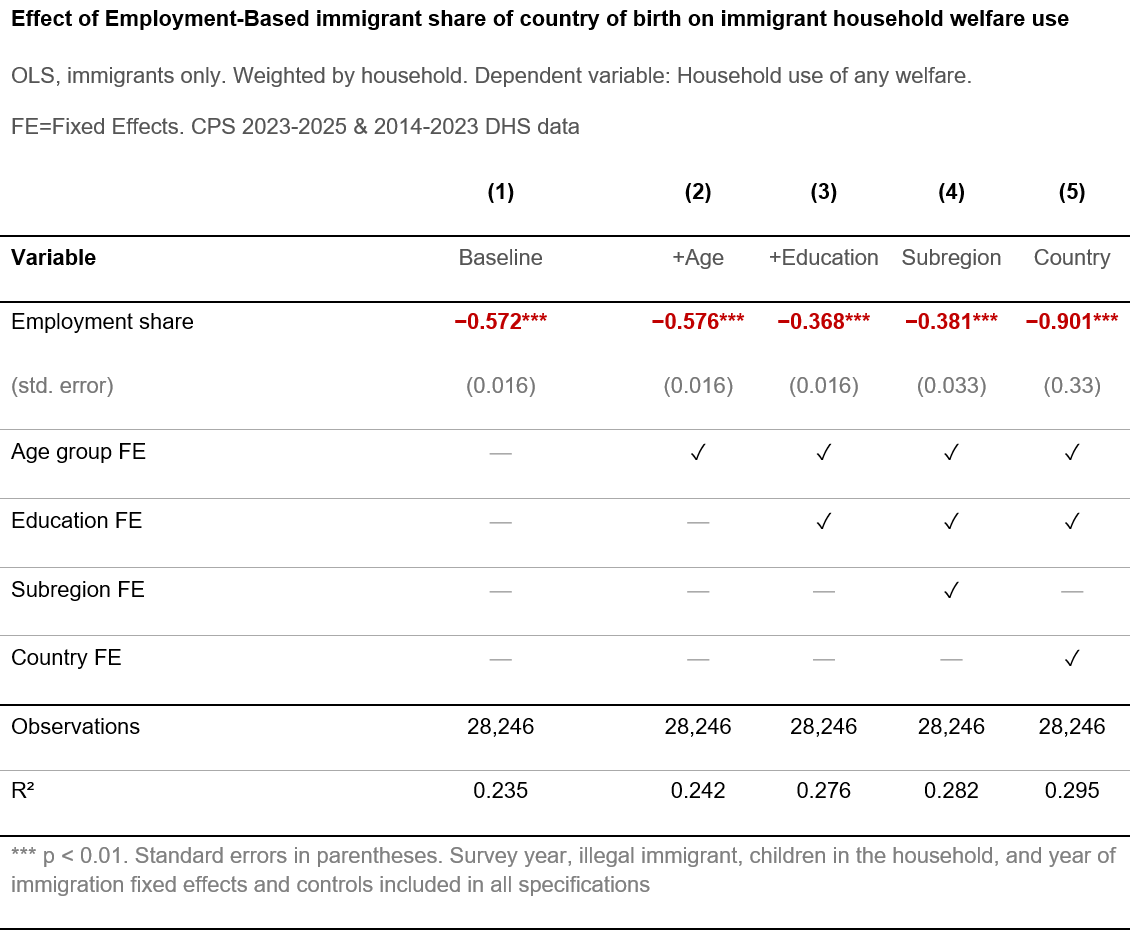
The results are striking. A one percentage point increase in a country’s employment-based share is associated with roughly a 0.57 percentage point reduction in welfare use among its immigrants. Put differently, increasing the employment-based share of immigrants from 16 percent to 50 percent would reduce welfare use by nearly 20 percentage points. I describe a similar proposal to this in my last Manhattan Institute report on the fiscal impact of immigrants which you can read here as well as play with the immigration economics calculator I designed here..
When country fixed effects are included, the effect of increasing the EB share of immigrants from becomes even larger. Holding the country mix constant, selecting more immigrants through employment reduces welfare use even further. Once education, age, and selection are accounted for, the predictive effect of each country of birth on welfare use become statistically insignificant for all but a few countries with small sample sizes[i].
In other words, immigrants with similar characteristics who enter through employment-based pathways—whether from Mexico, India, or Norway—have similar welfare usage rates.
This finding overturns the conventional narrative.
Mexicans do not use more welfare than Norwegians because of inherent differences between the countries. They do so because fewer Mexican immigrants are selected through employment-based pathways. The most important issue of immigration is not country of origin—it is selection within each country of origin.
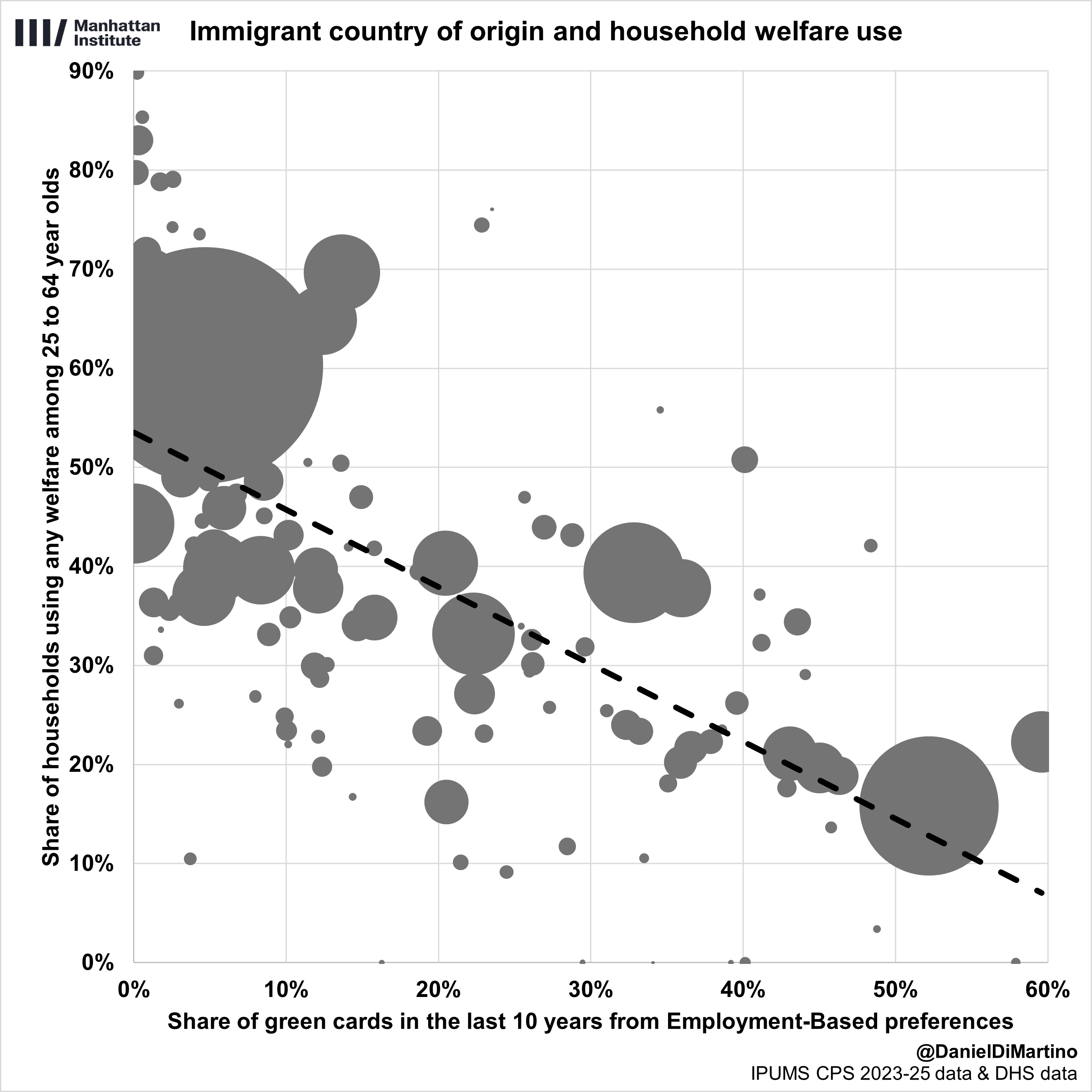
Across regions, subregions, and individual countries, the same pattern holds: More employment-based selection is associated with lower welfare use.
Figure 9: Welfare use by immigrant households by subregion of origin and share of immigrants who are sponsored by U.S. employers.
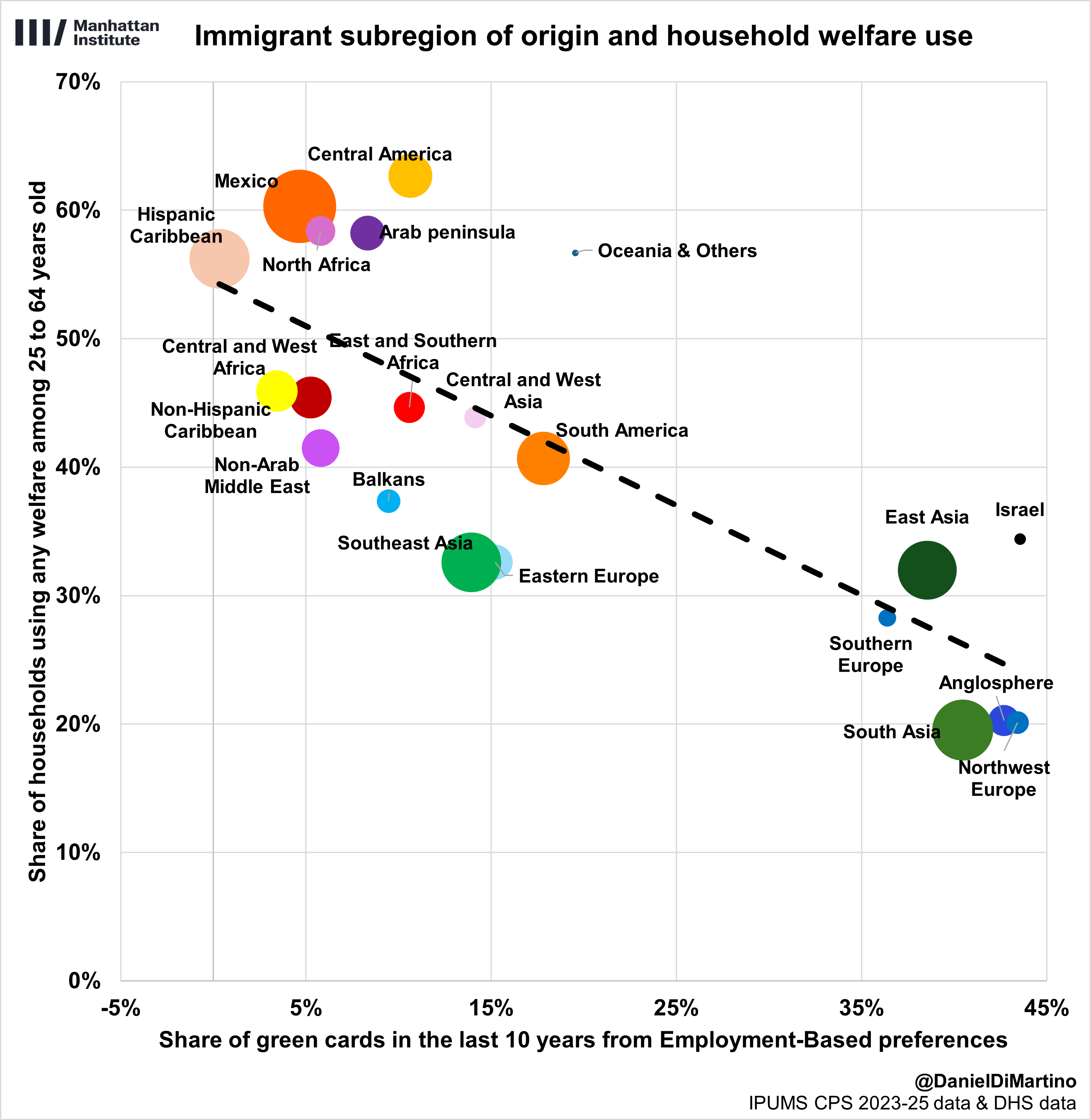
Figure 10: Welfare use by immigrant households from European or Western countries and share of immigrants who are sponsored by U.S. employers.
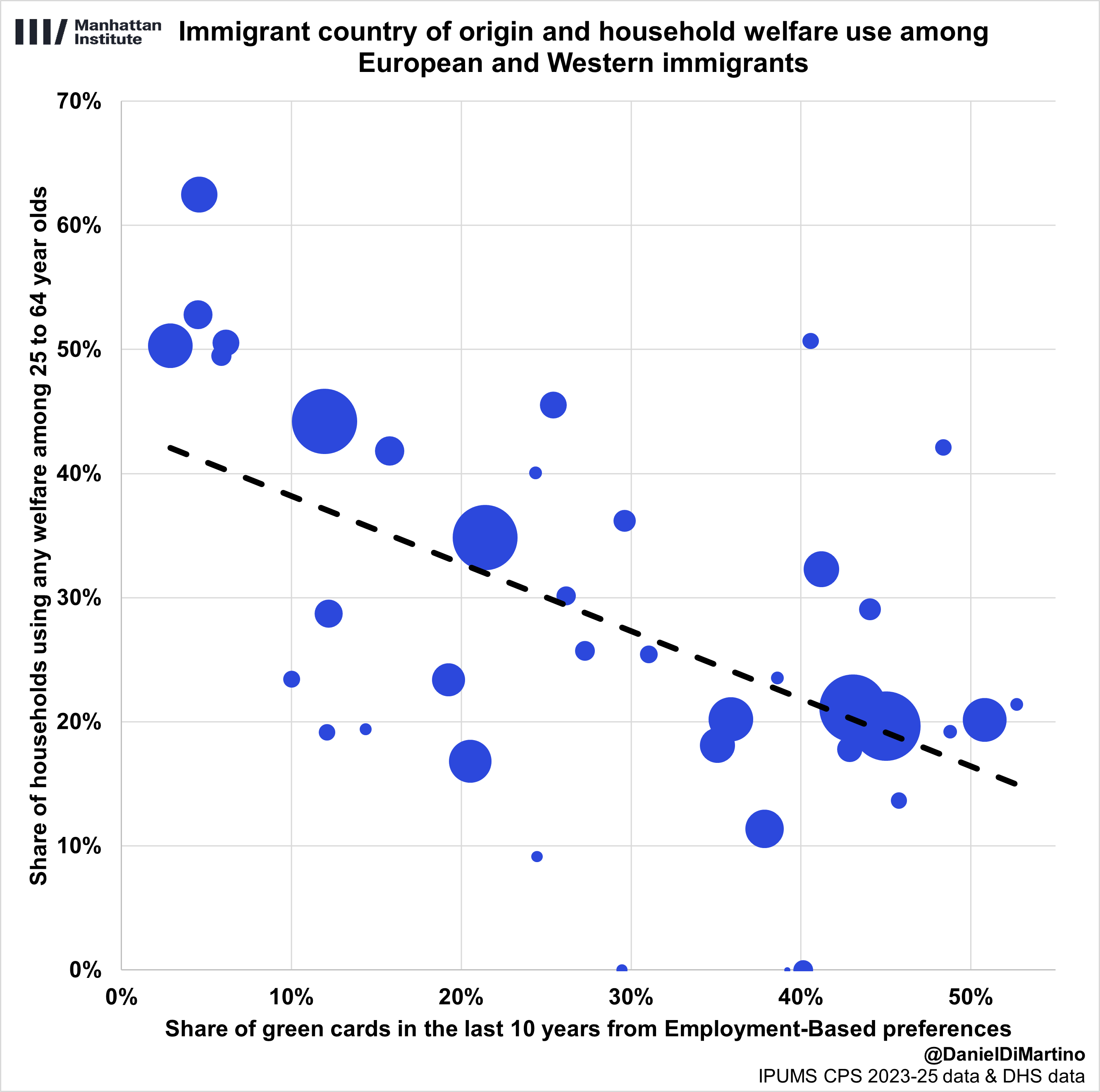
Figure 11: Welfare use by immigrant households from Latin American countries and share of immigrants who are sponsored by U.S. employers.
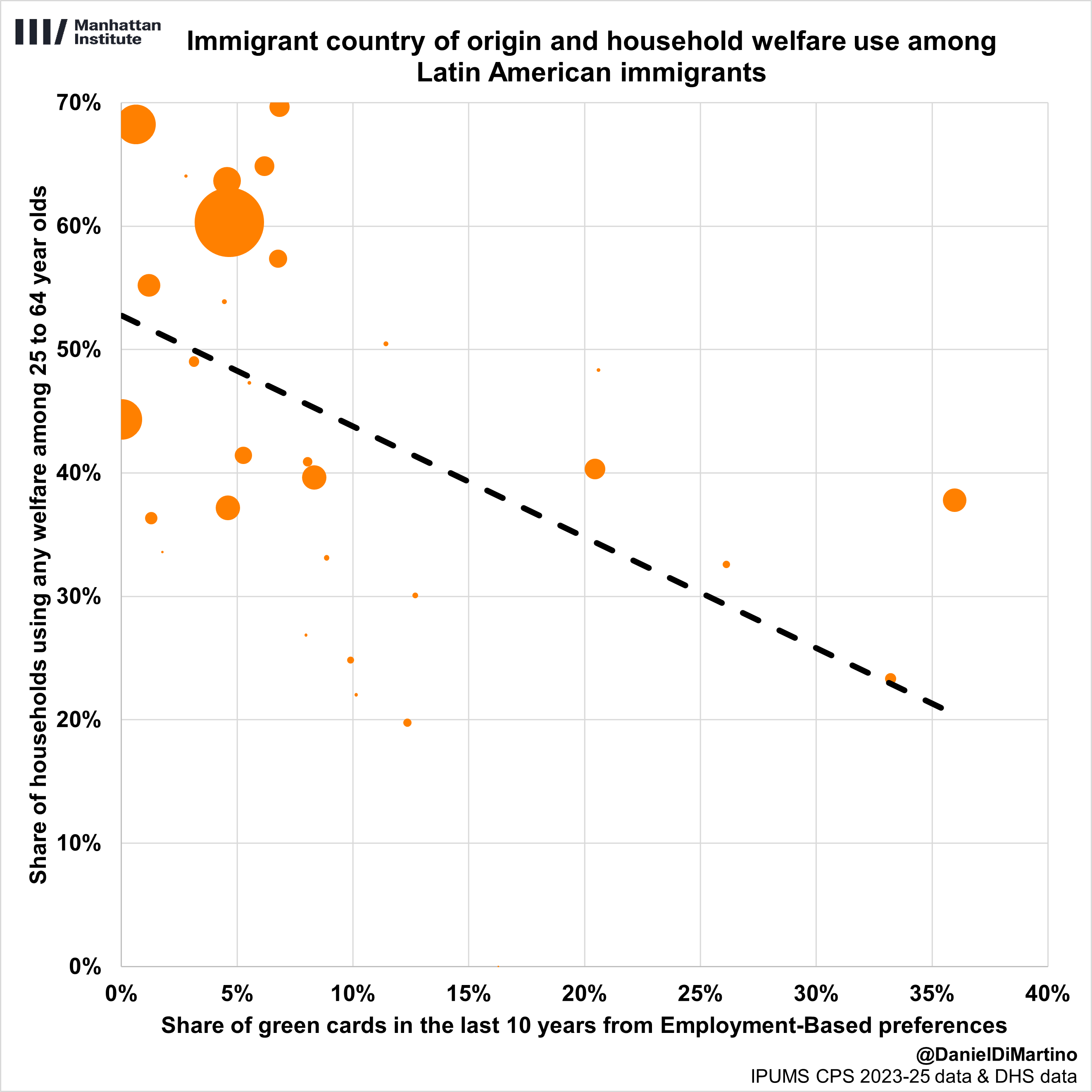
Figure 12: Welfare use by immigrant households from Asian countries and share of immigrants who are sponsored by U.S. employers.
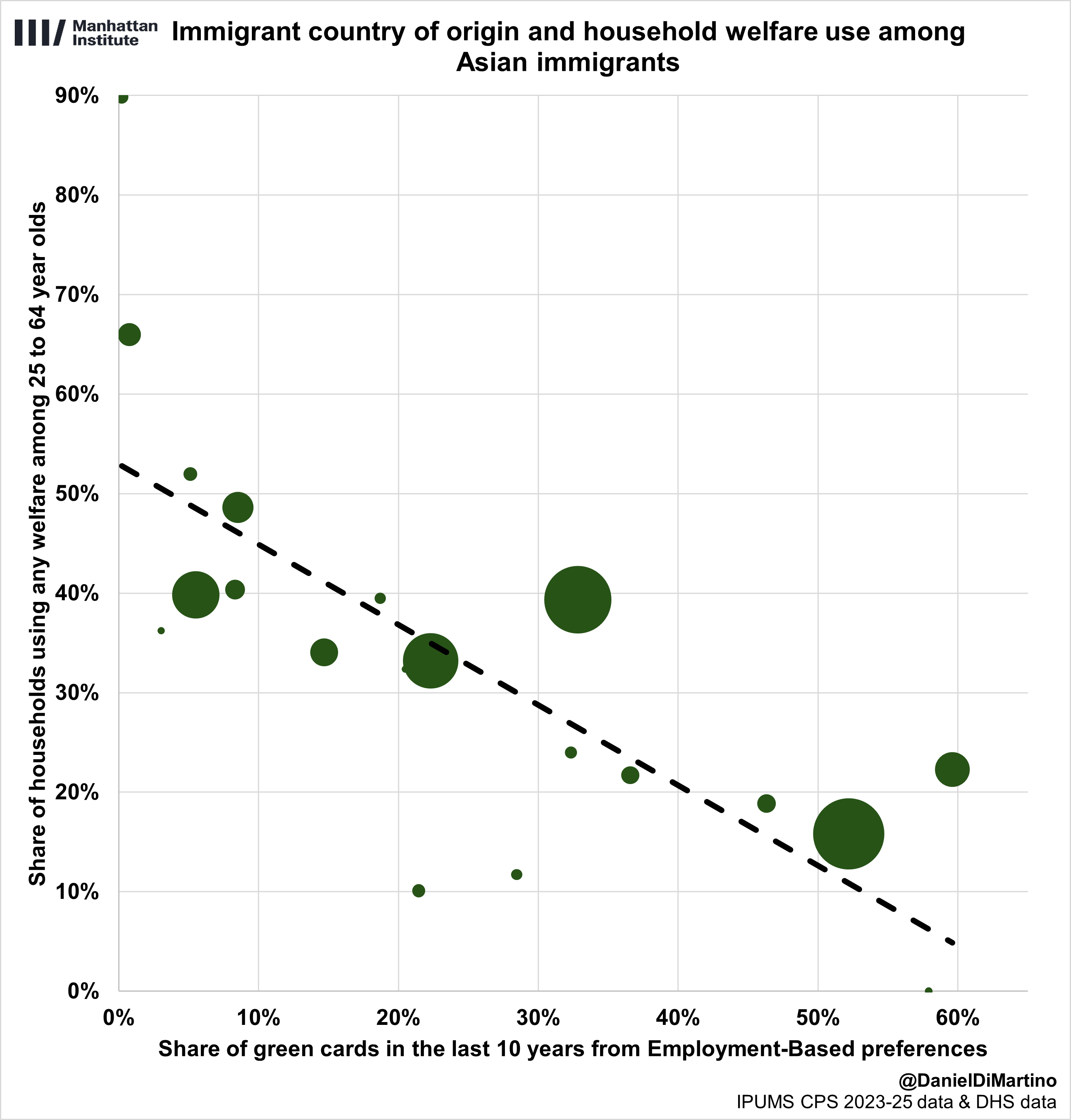
Figure 13: Welfare use by immigrant households from African and Middle Eastern countries and share of immigrants who are sponsored by U.S. employers.
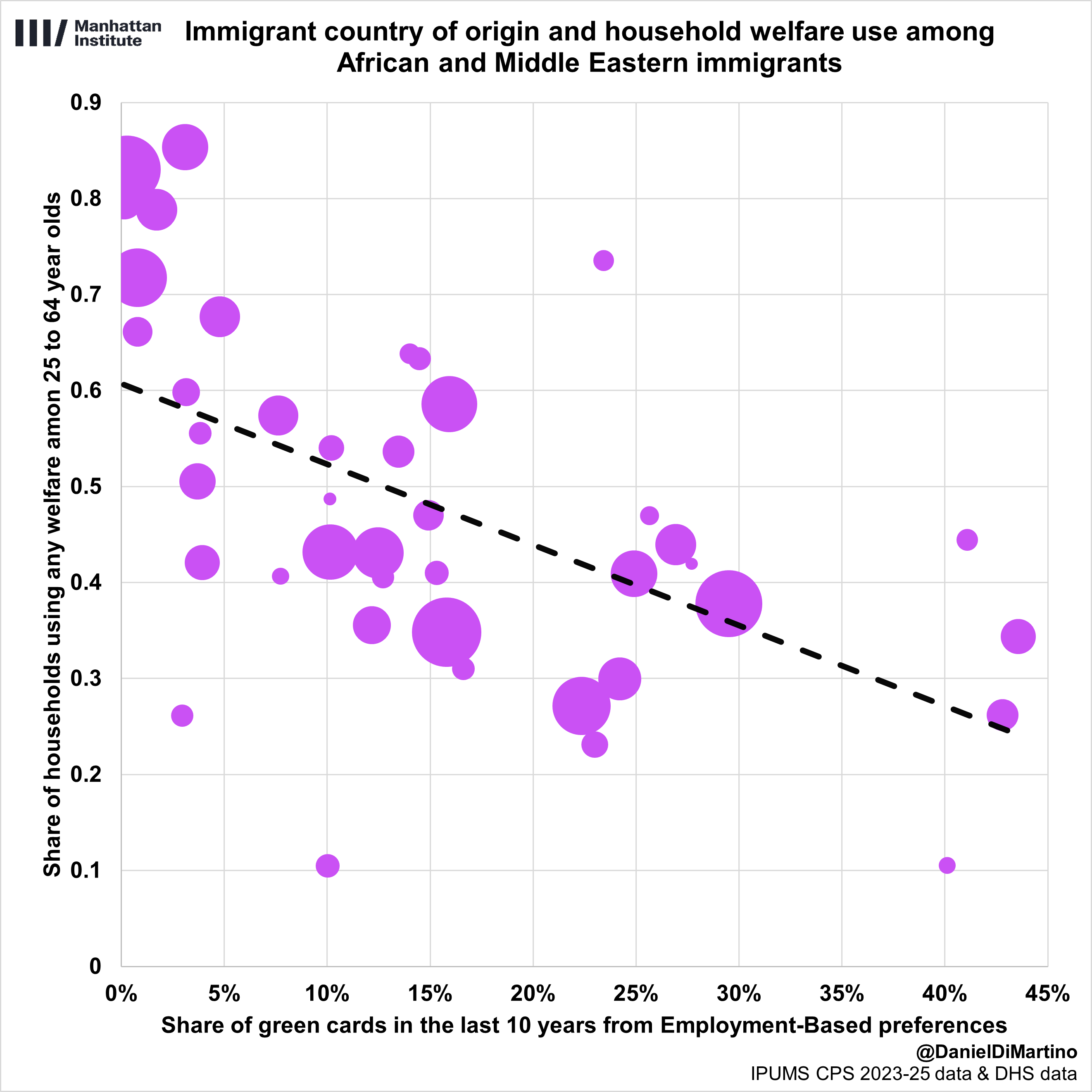
Figure 14: Welfare use by immigrant households by country of birth and share of immigrants who are sponsored by U.S. employers from each country.
The policy implication is straightforward. If policymakers are concerned about immigrant welfare use, targeting specific nationalities is the wrong approach. The real lever is the composition of the immigration flow regardless of country of origin.
A system that prioritizes employment-based immigration will naturally select immigrants who are more likely to be self-sufficient and less likely to rely on public assistance. A system that emphasizes family reunification or humanitarian admissions will, by design, admit individuals who are poorer, less likely to speak English, be employed, and more likely naturally to be on welfare.
This is not a moral judgment on any immigrant but a policy tradeoff based on facts.
The CIS report is valuable in documenting differences in welfare use. But without accounting for how immigrants are selected, it risks pointing policymakers toward the wrong conclusion, one that shuts off thousands of highly-skilled immigrants from some countries while keeping the door open for net burdens from other countries. This would be detrimental to the American taxpayer and his economic prospects.
The real story is not about where immigrants come from. It is about how they come.
And on that question, the data is clear: skills-based, employment-sponsored immigration leads to lower welfare use—no matter which country immigrants come from.
[i] The countries with significantly positive likelihood of being on welfare after controlling for their characteristics are:
· Belgium
· France
· China
· Korea
· Israel
While the countries with significantly negative likelihood of being on welfare after controlling for their characteristics are:
· Costa Rica
· Guyana
· Uruguay
· Sweden
· Portugal
· Poland
· Romania
· Bulgaria
· Bosnia
· Croatia
· Latvia
· Laos
· Sierra Leone
· Kenya
Note, this does not imply they use more or less welfare than American native-born citizens or other immigrants, on average, but that they use more or less welfare than you would predict based on their age, education, and share of immigrants who are sponsored by employers.
No.
Country of origin is better for preventing welfare use in the long run.
Immigrants from less assimilatory cultures will bring hostile ethnocentrism. Such as medhi Hassan, and zohran madami. They make it their life's goal to maximise hostile immigration and extract maximally from the commons.
Welfare use spirals out of control when clannish groups (like Somalians) with bad cultures aggregate together and become an extractive group - and the more successful members of their group can serve as their defenders in the legal system or political system.
If you want to bring people with less aligned ethnocentrism, then they must never be given citizenship as in the UAE
Excellent article, enough to convince me to subscribe. I do wonder if there are effects (probably minor ones) based on the taxonomy centered exclusively on achieving a green card vs other key points in the process of moving to the US -- based on my own experience. I first came here in 2005 (from my native Italy, so, Southern Europe) with a O-1 Visa, i.e., as an "Individual with Extraordinary Ability or Achievement"; this is not all that frequent, and, per se, would no doubt tend to qualify my arrival as "employment-based".
However, I had also married an American citizen in 2003 (we lived in Italy for a while); when I decided to ask for a green card (since O-1 is a temporary visa), my immigration lawyer strongly suggested relying on my marriage rather than my achievements, since, based on her long experience dealing with immigration for us Silicon Valley professionals, it was likely to be a smoother, faster, less-effort pathway. So, technically, my green card was family-based, not employment-based!
After that, naturalization requires 5+ years of lawful permanent residence, "good moral character" (?!), and passing reasonably-easy tests about English fluency and "civics" (the latter including history questions of dubious importance or relevance, but that's another issue) -- nothing to do with family or employment (unless those criteria affect the nebulous "good moral character" issue?) so not meaningful for your regression.
I think similar experiences are not all that rare (based in part with chatting with neighbors and friends here in Silicon Valley) -- O-1 visas are rare, but other temporary employment visas, such as H-1 B, are not; and while many employers are happy to sponsor H-1 B visas and the like, it is much rarer for employers to sponsor green card applications (and I believe there is no such thing as a "sponsor" for naturalization, years after you've obtained a green card). I
Immigrants who were already married to a citizen are probably few, but ones who marry a citizen after coming in with a H-1 B &c, I think, not so rare. So, there might be quite a few of us who are classified as "family based" (due to our green card) but are de facto really employment based -- first coming in via a temporary worker visa, later getting a green card via our marriage to a citizen, rather than based on our employment, just because it's a smoother, faster, cheaper way. I wonder...!